INFORMATION, SUPPLIES & USEFUL LINKS FOR YOUR HOLLAND LOP:
Pellets:
We feed our bunnies Kent/Blue Seal Show Hutch Deluxe 17.
(Please note, packaging has recently changed, see photo below).

Hay:
Second cut Timothy hay or orchard grass. We do not recommend Alfalfa hay. Make sure the hay is kept dry, and is not mildewed or musty. If it is, THROW IT OUT.
Fresh water should be available at all times.
⬇️ Highly Recommend ⬇️
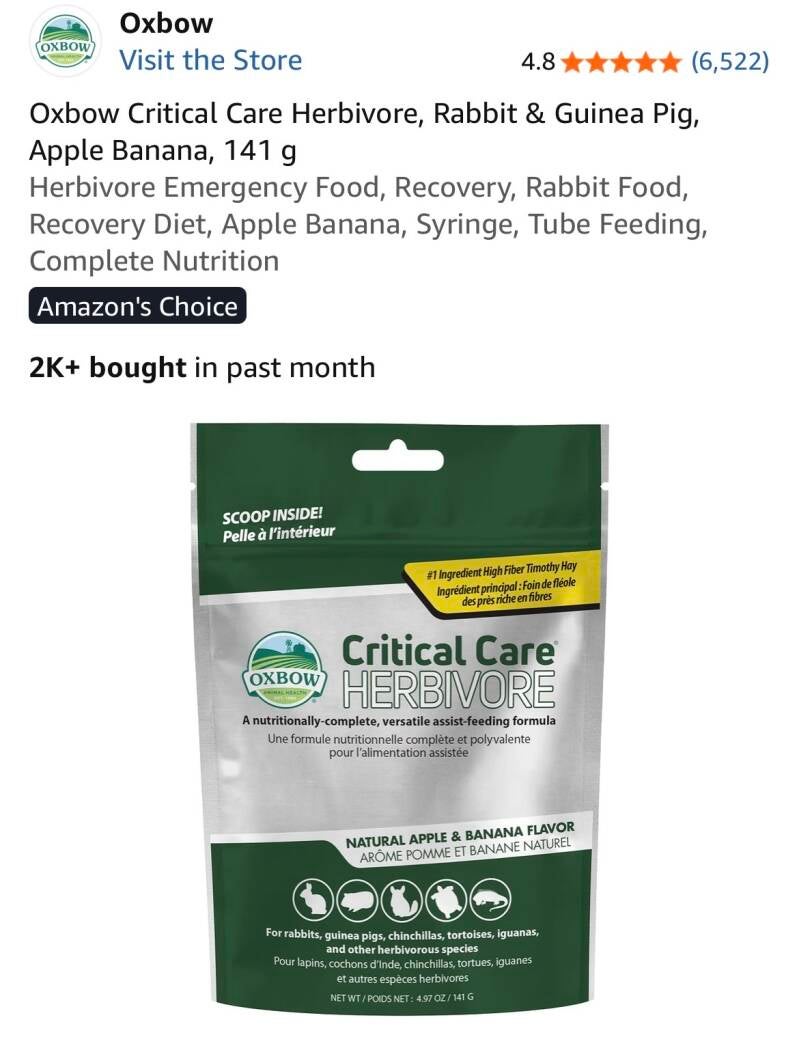
Oxbow Critical Care Herbivore
Rabbits, particularly Holland Lops, can have rapid onset gastrointestinal issues. This product is very effective and I strongly suggest having it on hand.
Recommend Products Through Amazon:
https://www.amazon.com/hz/wishlist/ls/NYE2KMYG1VV6?ref_=wl_share
New Bunny Owner Guide
1) Your bunny is 8 weeks old, still a baby. Treat it like it is! Give your bunny time to adjust to his or her new home.
2) Bunnies are animals of prey. When you bring your bun home, be gentle, and keep loud noises, and quick motions to a minimum. Try to avoid approaching your bunny suddenly from overhead.
3) Your bun has just spent its lifetime with mom and siblings. Put your bun in its cage and leave it for a while. Cover the cage except the front. Take away all nervousness.
4) After a few hours, take the bun out. Please pick up the bun with two hands, and gently bring it into your body with all four feet resting on your arms or body. If the bun tries to run away, don’t chase it. Wait for an opportunity (with slow movement) to pick it up. Assure the bun that it's safe.
5) Bunnies are not as timid as you think, so hold them securely so there’s no chance of jumping out of your arms.
6) If the bun wants to climb up your shirt, gently cover their eyes and bring them back down to your arm and pet them.
7) In purchasing a cage. First decide if it’s going to be outside or inside. In either case a wire bottomed cage with a tray is suggested. Solid bottomed cages will get pretty messy.
8) Litter box training is easy. Get a 8”x12” tray, or thereabout with at least 4-5” sides. Put a thin layer of equine pellets or wood burning pellets on the bottom covered with Timothy hay. Your bunny should gravitate to the hay, and a solid bottom, and begin to use it. If the bun starts to go somewhere else, move the litter pan to that spot. Obstruct the old spot with anything, just to detour them from going back.
9) At this point, you should be very aware of its feeding habits. Nothing but timothy hay, and a ¼ - ½ cup of (Show Hutch Deluxe) or your preferred food until your bun is about 4 months old. Now you can give a little more food. We will supply transition food before leaving.
10) Stay away from treats until they are at least 5-6 months old. Their digestive system is the #1 killer of bunnies. After 6 months old they can have a quarter size piece of carrot, slice of apple, or any green veggie. No iceberg lettuce, romaine preferred.
11) They are used to drinking and eating out of bowls. You can change to water bottles and secured food dishes, as they love to tip them over.
12) Bunny exercise. Having a little wooden box or anything they can jump up on is suggested. If you're keeping the bunny cage on the floor or an elevated cage, you can get inexpensive enclosures to put around the cage so they can come out and get some exercise. Keep them away from wires!
13) If your bunny at any time, stops eating, and seems bloated - call me 203-258-0618.
Helpful links on Pet Rabbit Care:
https://www.seattle.gov/documents/Departments/AnimalShelter/care-guides/care-sheet-rabbit.pdf
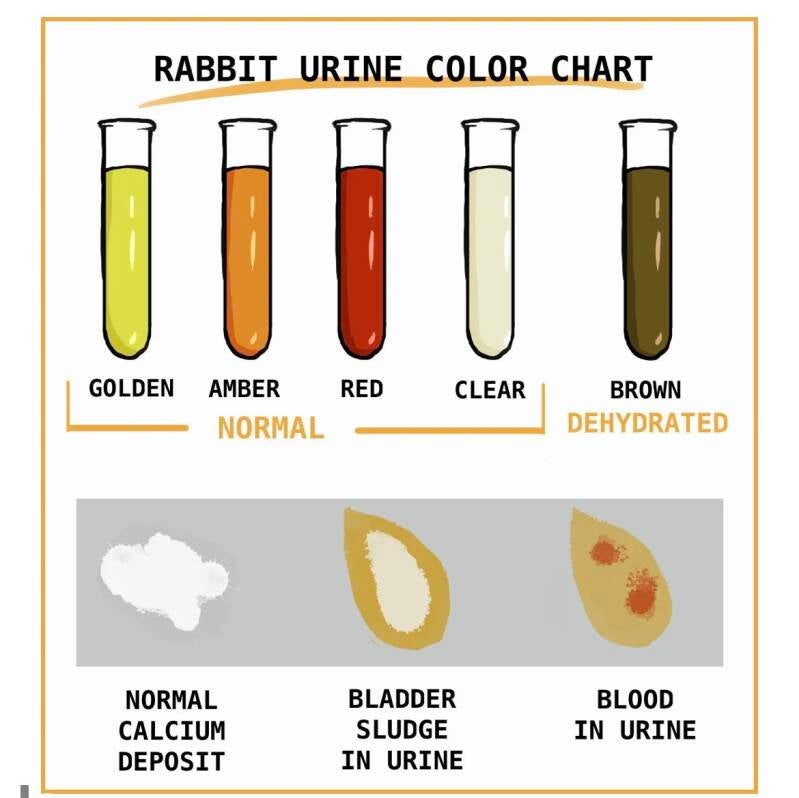
PLEASE TAKE NOTE: A healthy rabbit's urine color can vary greatly depending on diet and water consumption. Please refer to chart below.